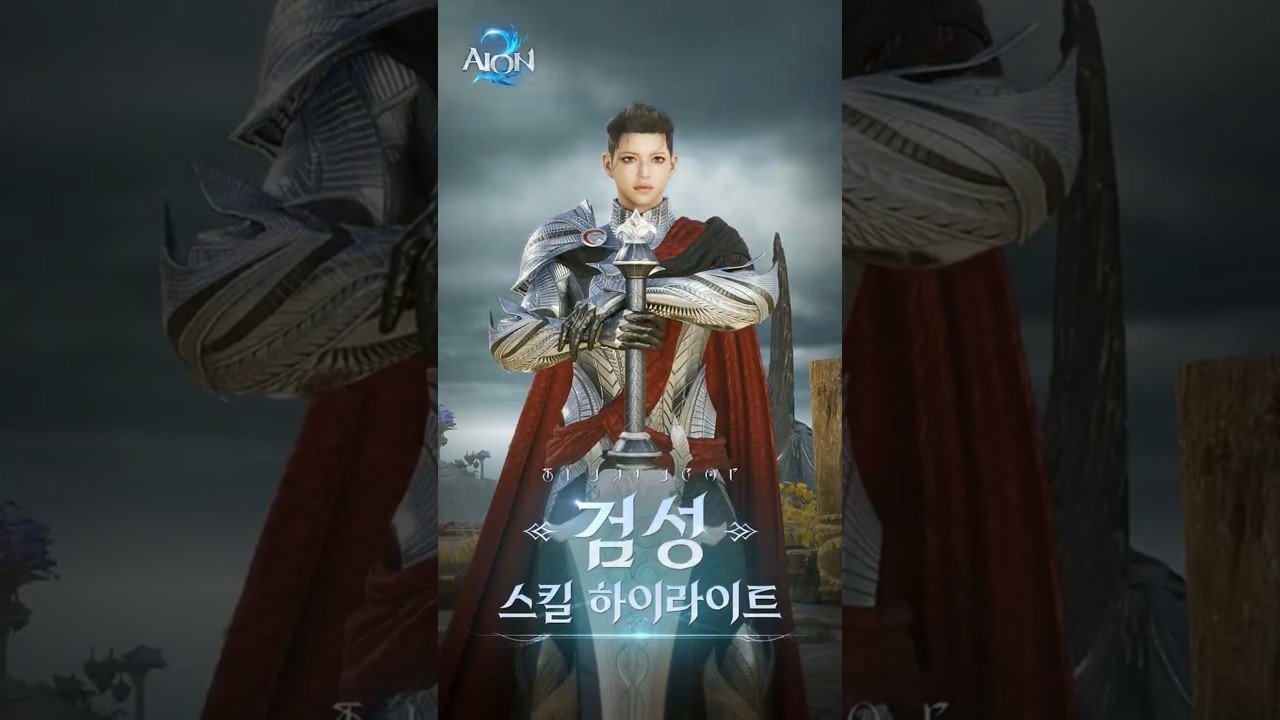
Gladiator is the sustained melee frontline option. Choose it if you prefer staying in contact with a target, managing pressure across several enemies, and trading some of Assassin's burst-and-exit style for a sturdier presence. Exact rotations and stat breakpoints remain patch-dependent.
Greatsword frontline role
Gladiator (검성) is the greatsword-wielding core of AION 2's melee line. The official class guide describes both high attack and defense, with a primary melee-damage role and enough health and protection to act as a secondary tank. That does not replace a Templar's dedicated party-tank tools, but it gives Gladiator more room to remain engaged when pressure rises.
The class suits players who enjoy reading enemy movement while remaining close enough to keep attacks flowing. Area pressure is useful when enemies cluster, but positioning still decides whether that pressure is productive or simply exposes the player. Treat every published “best rotation” as version-sensitive unless it names the current patch.
Greatsword pressure and commitment
Start by establishing a safe approach, then maintain a sequence that leaves room to react instead of spending every option immediately. Against several targets, group them only when the party can control the pull; against a boss, stay where you can continue attacking without standing in frontal mechanics. Movement and animation commitment are part of the class's real difficulty.
Do not import exact skill names or coefficients from the original AION without checking the AION 2 client. The franchise shares class themes, but skill behavior, progression systems, and balance are not interchangeable. Current numerical priority lists are therefore deliberately omitted here until verified against the live version.
Gladiator PvE priorities
For leveling, consistency is more valuable than a fragile showcase setup. Improve the equipment you can maintain, learn how many enemies you can safely hold, and preserve a defensive response for unexpected damage. In party dungeons, attack from a position that does not compete with the tank's control of the encounter.
Community discussions repeatedly frame melee uptime as the main practical test: theoretical damage falls when a player must disengage or is repeatedly hit by avoidable mechanics. That makes encounter knowledge a direct damage improvement. A reliable Gladiator who survives transitions contributes more than one built only around a training-target sequence.
Closing distance in PvP
PvP value comes from closing distance, sustaining pressure, and choosing when to commit. Duels, open-world fights, and organized faction battles create different demands, so a single universal PvP build is misleading. Keep an approach tool or defensive answer available when the opponent is clearly waiting for an overcommit.
Ranged opponents test route choice and patience, while group PvP tests target selection. Follow allied control rather than entering alone, and switch pressure when a target becomes inefficient to chase. Exact crowd-control chains and resistance thresholds are待确认 for the current patch.
Greatsword gear progression
Use activity-appropriate equipment and prioritize stable progression before expensive optimization. Compare items in the live client, including upgrade state and attached effects, instead of judging by item name alone. Separate leveling gear, dungeon gear, and PvP goals because each solves a different problem.
Best-in-slot lists age quickly after balance and content updates. This guide will only add named items when their source, version, and acquisition route can be verified. Until then, build enough durability to maintain melee uptime, then evaluate offensive gains through real encounters.
What Gladiator players experience
Players commonly describe frontline melee as satisfying when attacks feel continuous and frustrating when encounter movement repeatedly breaks contact. That is a play-style observation, not proof of class strength. Gladiator rewards players who enjoy adapting a route through mechanics more than those who want a fixed ranged rhythm.
The other recurring concern is responsibility creep: being sturdier does not make Gladiator the party's automatic tank. Agree on roles before difficult content and let Templar control enemy facing when one is present. This improves both survival and damage consistency.
Common mistakes
Do not pull extra enemies merely because the class can survive ordinary packs, and do not spend every mobility or defensive option on the opener. Avoid copying original-AION guides as if they describe AION 2 numbers. Finally, judge a setup in the activity it was designed for rather than treating one player's PvP showcase as a universal PvE recommendation.