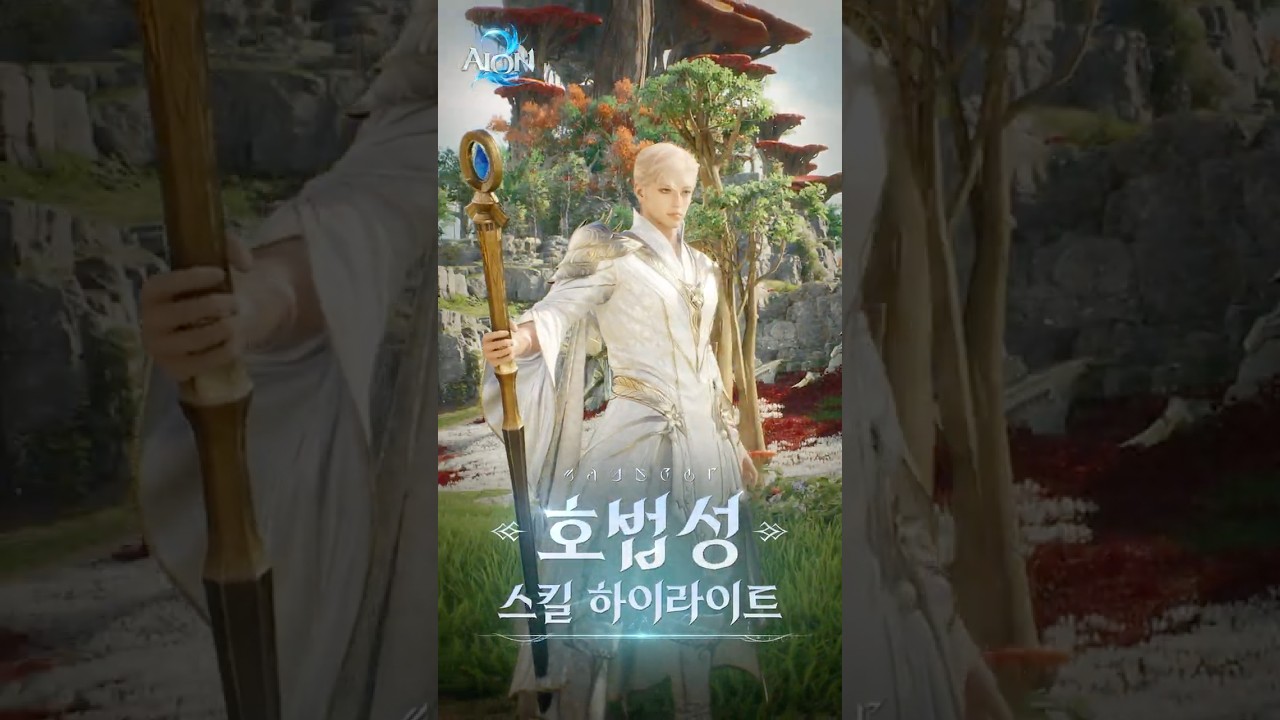
Chanter is a hybrid support class that combines close-range contribution with party enhancement. Choose it if you enjoy improving the group while still participating directly in combat, but do not assume it replaces a Cleric in every encounter.
Staff support and mantra role
Chanter (호법성) is AION 2's staff-wielding hybrid support. The official guide defines it as a master of mantras and buffs that raise allied capabilities, while also providing status effects, supplemental healing, and damage. This breadth is its identity: Chanter strengthens the party and controls tempo rather than replacing the Cleric as its primary healer.
Hybrid roles reward awareness of the entire party. A Chanter must know when direct offense is safe and when maintaining support value matters more. That makes the class attractive to players who prefer flexible decisions over a single repeated job.
Before a difficult encounter, decide what "stable support" means for that group. It might mean keeping the enhancement active through movement, preserving supplemental recovery for a known damage window, or using control when an add appears. A Chanter who has one priority per phase can make better use of the whole toolkit than one who tries to maximize healing, buffs and damage simultaneously.
| Party state | Chanter priority | Do not |
|---|---|---|
| Cleric is stable | Keep enhancement active and add safe pressure | Spend recovery before it is needed |
| Healing is strained | Supplement recovery and simplify the next danger | Overlap major tools without a call |
| Ally is out of range | Reconnect or call the range problem | Chase out of formation indefinitely |
| Add joins the pull | Use control where it simplifies targets | Add scattered pressure |
| Group PvP engages | Stay with the line and support coordinated action | Chase one target alone |
The table is a situational routine, not an official skill order. Exact durations and stacking rules must still come from current tooltips.
Mantra uptime and melee contribution
Enter combat with the party's needs established, maintain relevant support effects, and contribute at close range without losing sight of ally status. Avoid refreshing effects blindly if the current duration is sufficient; equally, do not tunnel on attacks until important support lapses. The exact timing depends on current skill behavior.
Skill names, effect values, stacking rules, and cooldowns require live-client verification. Original AION explains the class heritage but not current AION 2 numbers. Use current official updates before adopting any fixed support rotation.
Chanter party priorities
In leveling content, use the hybrid toolkit to reduce downtime and handle uneven pulls. In parties, remain positioned where support reaches intended allies while still avoiding boss frontal attacks and ground mechanics. Coordinate with the Cleric so both players understand who covers recovery and who preserves other utility.
Players often appreciate that Chanter remains active between support decisions. The corresponding concern is divided attention: a player focused on personal damage can miss the moment when the group needs help. A simple priority system is more reliable than trying to maximize every contribution simultaneously.
A useful review habit is to mark two timestamps per encounter: one where an enhancement mattered and one where supplemental recovery mattered. If you cannot identify either moment, the group may not have needed Chanter's support layer yet. If both happened at the same time, agree on an order with the Cleric before the next attempt.
For solo play, test how much offense you can add while still keeping one recovery response unused. That habit prevents hybrid play from becoming a dungeon-only reflex and makes unexpected adds less expensive.
Buff coverage and control in PvP
In PvP, stay connected to allies and make opponents work to separate the group. Hybrid contribution is strongest when support amplifies coordinated pressure rather than when the Chanter chases alone. Preserve defensive or recovery options for the enemy's commitment instead of spending everything during harmless poke.
Small groups may place more visible responsibility on the class than mass combat. Community opinions about strength therefore need their mode and composition attached.
Staff support progression
Choose gear for the role actually performed in your regular group. A solo leveling setup and an organized support setup may value different effects, and neither should be labeled universally best. Verify each item's current tooltip, source, and upgrade path before committing scarce resources.
Evaluate support gear by whether it keeps you present. If a higher-output setup tempts you away from support range or into frontal attacks, it can reduce the group's stability even when the personal number improves. Test one upgrade at a time in the same encounter and record whether uptime, survival or recovery actually changed.
Support value can be difficult to measure from a single number. Evaluate whether upgrades improve uptime, survival, and the ability to stay near allies, not only personal output. Named universal recommendations remain omitted until sourced for the live version.
What Chanter players experience
Chanter appeals to players who enjoy being useful in several ways during the same encounter. The recurring downside is that success can feel less visible than a large damage number or a direct heal. Group feedback and smoother encounter execution are often better indicators of performance.
The class can also feel demanding when party members spread out or ignore mechanics. That experience reflects group coordination as much as class balance. Judge the toolkit across multiple group types before drawing a ranking conclusion.
Support review routine
Review a dungeon or PvP match with four questions. Were the intended allies actually inside support range? Did an enhancement lapse at a moment when the group needed stability? Did supplemental recovery overlap with the Cleric's plan? Did melee contribution pull you into a mechanic that support positioning could have avoided? These answers identify the next practice target more reliably than comparing personal damage.
For solo progression, test how much offense you can add while still preserving a recovery answer for an unexpected pull. In organized groups, agree on communication before the encounter begins: who covers primary recovery, who enhances, and who uses control first. Equipment decisions should wait until live tooltips confirm effect duration, stacking behavior, and upgrade cost for the content you play. A support upgrade that keeps you near allies is often more valuable than a small increase that encourages unsafe positioning.
Common mistakes
Do not assume “support” means standing away from combat, and do not assume hybrid healing removes the need for a primary healer. Avoid chasing personal damage while key party effects lapse. Never copy effect values or skill orders from original AION without confirming them in AION 2.
Frequently asked questions
Can Chanter replace Cleric?
No. Official material describes Chanter as a hybrid with mantras, buffs, status effects, supplemental recovery and damage. Cleric remains the primary direct healer, so difficult groups still benefit from clear role boundaries.
What should Chanter do first in a party?
Establish role boundaries with the Cleric, then keep relevant enhancement active while avoiding unnecessary risk. Add offense only when support and positioning are stable.
How does Chanter handle spread allies?
Call the range problem early and support the connected group. Chasing one overextended player can turn one weakness into a split party.
Is Chanter good for solo progression?
Its breadth is useful for reducing downtime and handling uneven pulls. Preserve one recovery answer and increase pack size gradually rather than treating hybrid tools as unlimited sustain.
How should I judge a Chanter gear upgrade?
Judge it by whether it improves support uptime, survival or reliable presence in your regular group. Confirm current effect duration, stacking behavior and cost before investing.
Verification notes
- Officially confirmed: staff identity, mantras, buffs, status effects, supplemental recovery and hybrid role come from the official Chanter pages.
- Player observation: divided attention and less-visible support value are recorded as common player experience rather than measured rankings.
- Editorial judgment: phase priorities, communication habits and gear tests are this site's practical interpretation for organized play.
- Deliberately omitted: exact effect values, stacking rules and a fixed support rotation require current-client verification.