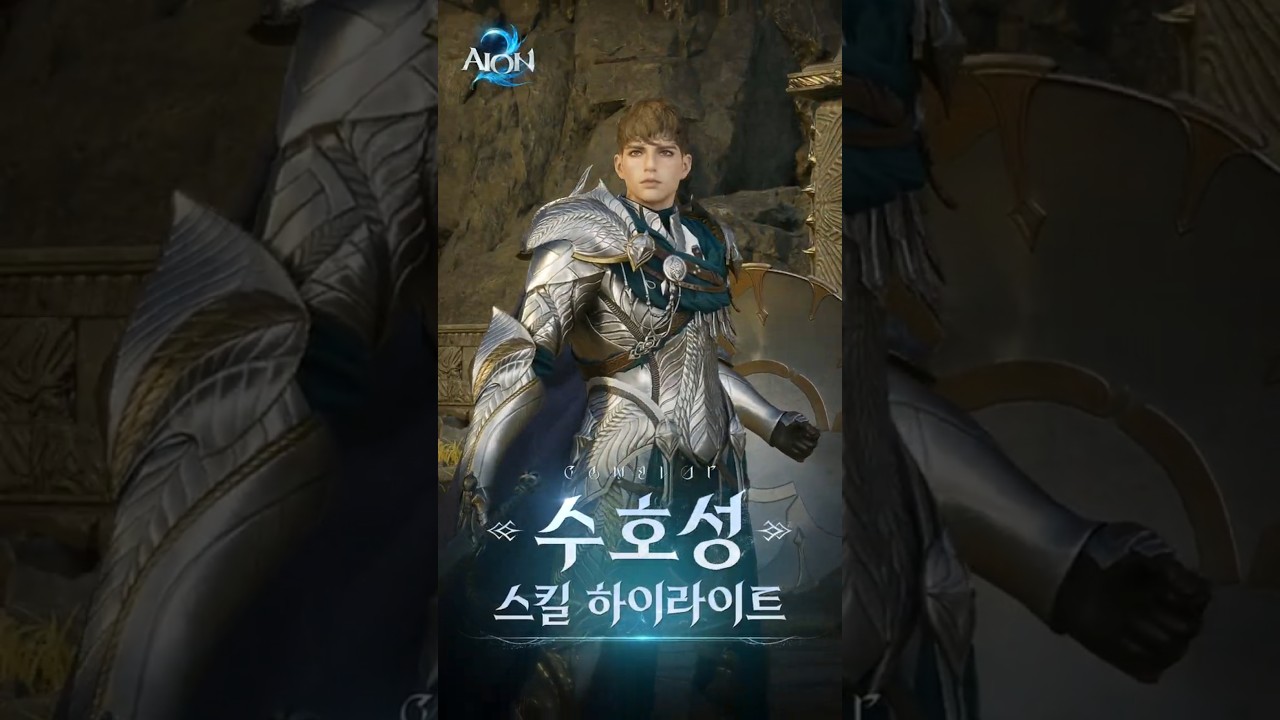
Templar is AION 2's dedicated tank: it uses a longsword and shield, establishes enemy hostility and protects the party from the front line. The class is a good fit if you enjoy deciding where a fight happens, when the group moves and which attack deserves a defensive answer. Its value is party stability, not the largest personal damage number.
The job is to make space
Templar, called 수호성 in the Korean client, is the clearest dedicated tank identity in the current class set. The official class guide describes a longsword-and-shield fighter with blocking, hostility and protection tools. In a party, that means more than surviving damage. The Templar decides where the enemy stands, which direction dangerous attacks face and when the group is allowed to move.
Choose Templar if you like visible responsibility. A good pull gives the healer a readable recovery position, gives melee players a safe angle and gives ranged players a stable target. A bad pull can make four other players look weaker than they are.
What to call before the pull
Say three things before difficult content:
- Which target or group you are opening.
- Where you intend to place it.
- Which direction the party should avoid.
This is not formal raid language. It is a fast way to prevent the healer from standing in one place while the tank drags the fight somewhere else. If the party is learning, also say whether the pull is a test or a normal attempt.
The official Expedition material establishes the tank role. The communication advice is editorial: it turns the published role into a repeatable party habit.
The first ten seconds decide the pull
Open by establishing hostility before damage dealers commit. Move the enemy to a position with enough room for the party, then turn dangerous frontal attacks away from allies. The official skill material describes a Fierce Strike, Critical Strike and Desperate Strike chain that deals damage, increases hostility and recovers mana while allowing movement. That supports a moving tank loop rather than a stationary one.
The first review question is not “Did I survive?” It is “Did the party get a stable target?” If the healer has to chase, ranged players are pushed out of support or melee players stand in a bad front, the pull is already expensive even when the Templar remains alive.
Three movement rules for dungeon tanks
Move for a reason. Relocate for a mechanic, a safer party position or a target-control problem. Do not rotate a boss because the camera feels untidy.
Move predictably. Short, readable movement gives allies time to follow. A sudden long retreat can create a line-of-sight problem for the healer and a target problem for the party.
Re-center after movement. Once the mechanic ends, check enemy facing, party range and the next safe area before returning to ordinary pressure.
These rules are more durable than a fixed opener because the current client may change skill timing while the party still needs a readable fight.
Defensive tools are a schedule
Do not spend every protection tool on the first visible damage. Match a defensive response to the attack that would otherwise break formation, consume the healer's recovery window or force a dangerous movement. Keep an answer for the next mechanic when the encounter gives you one.
| Failure | First question | Better next attempt | | --- | --- | --- | | Lost hostility | Did damage commit before the opening was stable? | Call the target and open earlier | | Party scattered | Was the enemy moved too far or too often? | Choose a smaller movement route | | Healer strained | Was avoidable damage treated as normal damage? | Defend or move for the actual telegraph | | Wipe during a mechanic | Was the defensive tool used before the dangerous event? | Save it for the named mechanic |
This is a review framework, not a claim that one skill order solves every encounter.
Choose gear by the failure you are solving
The official class page confirms the longsword and shield identity, but it does not turn one item set into a universal answer. Start with equipment that keeps hostility generation, survival and resource use stable in the activity you actually play.
If the party wipes because the Templar cannot survive a known hit, investigate defensive options. If the party is safe but targets keep turning, investigate hostility, timing and positioning before buying more durability. If the run fails after a long relocation, test the route and camera before treating the problem as an equipment problem.
Check the live tooltip, Soul Imprint state, extra options, upgrade cost and replacement path before spending scarce materials. PvE tanking and PvP protection can ask different questions; label saved sets by purpose rather than calling one setup “best.”
PvP: protect the line, not the chase
Templar creates PvP value by occupying safe space, disrupting enemy access and protecting vulnerable allies. Stay close enough to punish a dive, but do not chase one retreating target until the back line is exposed. In an organized fight, a tank who keeps the team connected can contribute more than one who wins a short solo exchange and leaves the group open.
Preserve mobility or defense for the opponent's real commitment. An opener that spends every answer may look aggressive but leaves no response when the enemy focuses the Templar or attacks the healer.
A five-minute review after a wipe
Ask the party to answer one question each: where did the target move, where did support break, which mechanic was missed and which tool was unavailable? Write down one change for the next attempt. This is better than replacing the whole build after one failed run.
The official sources establish the class role and skill context. The review routine is this site's editorial method for turning a failed encounter into a testable adjustment.
Common mistakes
Do not treat Templar as passive damage absorption. Do not begin while the party is still moving into position, move a boss without a mechanic-driven reason or overlap every defensive skill during the opener. Do not copy original-AION values into AION 2 without checking the current client.
Finally, judge the class by the party outcome. Stable facing, controlled pull size, readable movement and consistent clears are stronger evidence of a good Templar than personal damage alone.